
Generative and Experimental Perspectives for Biomolecular Design
Workshop at the 13th International Conference on Learning Representations
April 27, 2025, Singapore
About
Biomolecular design, through artificial engineering of proteins, molecules, and nucleic acids, holds immense promise in addressing pressing medical, industrial, and environmental challenges. While generative machine learning has shown significant potential in this area, a palpable disconnect exists with experimental biology: many ML research efforts prioritize static benchmark performance, potentially sidelining impactful real-world applications.
The Generative and Experimental perspectives in bioMolecular design (GEM) workshop seeks to bridge this gap by bringing computationalists and experimentalists together. Together, we will explore the strengths and challenges of generative ML in biology, experimental integration of generative ML, and pinpoint biological problems ready for ML.
GEM is collaborating with Nature Biotechnology to allow exceptional submissions to be considered for fast-tracking in their journal. GEM features two tracks of submission: an in-silico generative machine learning track, and an experimental track for any papers that have wet lab results.
Our lineup features renowned scientists as panelists and emerging leaders as speakers, encapsulating a spectrum from high-throughput experimentation and computational biology to generative ML. With a diverse organizing team and backed by industry sponsors, we dedicate the workshop to pushing the boundaries of ML's role in biology.
GEM is an in-person workshop on April 27th in Singapore at ICLR’25.
Join our mailing list today to stay updated.
Logistics of the day
Date and Location:
Our workshop will be held on April 27th 2025 at Hall 4 #4 in the Singapore Expo.
Posters:
We have two poster sessions — one in the morning and another in the afternoon. Session assignments for each poster will be posted shortly. Please put your posters up in the breaks before your session and take them down after your session. The poster assignment will soon be advertised on our website for attendees. Poster dimensions are 24in x 36in in portrait format only.
Schedule:
The schedule can be found on the ICLR workshop page. Thanks to our sponsors, we will provide lunch catering with a set amount of lunchboxes. We also host an after party at Tag Restaurant And Bar starting at 6:30pm.
Openreview:
All accepted submissions have now been made public and viewable unless the authors specifically requested otherwise. Reviews and discussions are not public. https://openreview.net/group?id=ICLR.cc/2025/Workshop/GEM
Call For Papers
GEM has two tracks: a machine learning track, and a biology track.
These topics include but are not limited to the following:
Biology track
Biological problems and data ripe for generative ML and/or employment of ML for biomolecular design with wet lab experimental results.
Biological problems apt for ML applications
High-throughput data generation methods
Adaptive experimental design
Benchmarks, datasets, and oracles
ML track
Generative ML advancements for biomolecular design with in silico results.
Inverse design of all biomolecules
Modelling biomolecular data
Model interpretability
We are partnering with Nature Biotechnology from Springer Nature. Authors can opt to have their submissions considered for fast-tracking to Nat. Biotech. See below for details.
Call for Submissions:
GEM workshop welcomes submissions in two formats:
Short papers: Both ML and Biology tracks. Up to 5 pages (excluding references & appendix).
Extended abstracts: Biology track only. Up to 2 pages, similar to standard biological conferences.
Papers and extended abstract should present novel work that has not been previously accepted at an archival venue at the time of submission.
The submissions, including extended abstracts, need to be anonymized and will be subjected to one round of double blind peer-review.
Short paper submissions must be formatted using the ICLR 2025 main conference template, replacing the style file with the GEM version. We recommend extended abstract submissions to be formatted using either the extended abstract template, or the LaTeX template above. The maximum file size for submissions is 50MB. Fast-track opportunity:
GEM will nominate accepted papers to be considered for expedited peer review at Nature Biotechnology. In addition to the GEM reviewers, the Editors of Nat. Biotech., as well as 1-2 additional reviewers will be actively engaged in the expedited review of any accepted papers being considered for publication in Nat. Biotech.
Presentation and Publication:
Accepted papers will be invited to present a poster at the workshop, and the organizers will nominate spotlight talks based on reviewer comments. This workshop is non-archival and does not publish proceedings except for any papers accepted at Nat. Biotech. However, camera ready versions of accepted papers will appear in OpenReview unless the authors specifically request otherwise.
We encourage submissions of:
Novel research concurrently in submission.
Encouraging work-in-progress results seeking feedback.
Forward-looking position papers sparking community discussion.
Submissions will be made through OpenReview.
The workshop will provide travel grants for authors who are from underrepresented groups and/or who need financial assistance. We will release a form in March 2025.
Reviewer self-nomination: If you would like to sign up to be a reviewer for GEM-2025, please fill out this form! If you have reviewed for GEM in 2024, you do not need to sign up again.
Important Dates
Submission Deadline: 10th 13th February 2025, 11:59 PM (AoE, deadline extended)
Notification of Acceptance: 3rd 5th March 2025
Camera-Ready Deadline: 15th April 2025 11:59 PM (AoE)
Workshop Date & Location: 27th April, 2025. Singapore EXPO.
Seed Grants
This year, with the generous support of our sponsors, we are launching small ‘seed grants’ (USD $1,000 each) to catalyze new collaborations between experimental and computational researchers attending the workshop. The goal is to create meaningful, interdisciplinary partnerships between dry and wet lab, and to provide small initial support for promising projects that align with cutting-edge biological challenges and AI-driven solutions.
We will publicize a dedicated a "matchmaking" social event during the main conference, where participants with overlapping research interests can connect and brainstorm potential projects. Following this session, teams (2-4 people, at least 2 different institutions) will be invited to submit concise, half-page proposals and one slide presentations outlining their project idea, collaboration plan, and expected outcomes. The proposals will be pitched to our speakers, panelists, and sponsors during the second poster session. Seed grants will be awarded based on the novelty of the idea, alignment with the workshop's themes, feasibility, and potential for impact. Selected awards will be announced publicly before the closing remarks. Funds will be disbursed after the workshop to the institutions to support project initiation. To further incentivize progress, we plan to invite the awardees back for short talks at the potential 2026 edition of the workshop, where they can share insights, showcase results, and inspire the next wave of AI and biology collaborations. See FAQ for more information.

Invited Speakers & Panelists
Florian Hollfelder
Cambridge University

Kyunghyun Cho
NYU, Prescient Design

Kotaro Tsuboyama
University of Tokyo

Pranav Murugan
Genesis Therapeutics

Michael Bronstein
University of Oxford

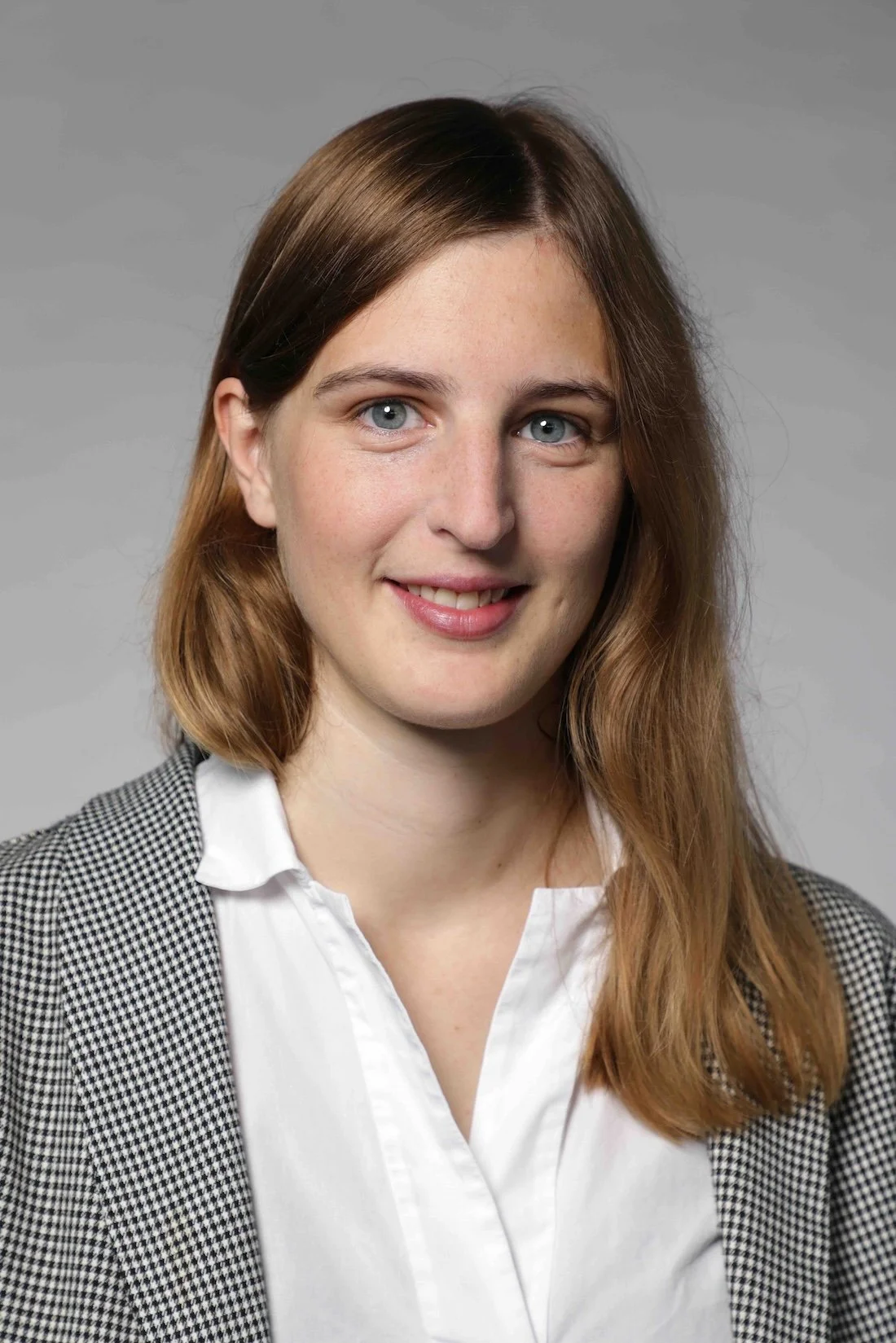
Charlotte Bunne
EPFL
Chaok Seok
Seoul National University
Workshop Organizers
Students

Mila, McGill University, Dreamfold

Mila, Université de Montréal, Dreamfold

MIT

Genentech
Caltech

MIT

University of Washington

Duke University
Faculty
Duke University

MIT

MIT
Caltech

Mila, Université de Montréal
Industry

Braidwell



Other AI for Science workshops at ICLR 2025
If you feel that your work is not a good fit for the GEM workshop, consider submitting to one of the other AI for science workshops, such as:
FAQs
We will continue to update this list as we work further details. Please also check the ICLR homepage and ICLR FAQ for general question such as registration and traveling. For any questions not covered in the FAQ, feel free to email us at gembioworkshop@googlegroups.com.
-
Nature Biotechnology is a leading journal from Nature Portfolio. It serves as a platform for groundbreaking work that advances the understanding, application, and innovation of biotechnological methods, tools, and approaches. The journal is committed to advancing the integration of experimental and computational approaches to solve key challenges in the field.
Given the alignment of the goals of GEM and Nature Biotechnology, we are excited to announce our partnership with the journal for ICLR 2025. Authors submitting to GEM who are interested in their work being considered for fast-tracking to Nature Biotechnology can select this option in OpenReview during the submission process.
Following GEM’s acceptance notifications, authors of selected papers will be invited to revise and submit their manuscript to Nature Biotechnology by a specified deadline. During the expedited review process, the Editors of Nature Biotechnology will work alongside GEM reviewers, and 1-2 additional expert reviewers may be involved to ensure a thorough and high-quality evaluation.
Last year, GEM had a similar opportunity to collaborate with Cell Systems from Cell Press. 6 papers were invited to be fast-tracked to Cell Systems.
-
GEM will provide a live streamed zoom option for virtual attendees to watch the invited and contributed talks as well as panel discussion. However, the poster session will be held in-person only.
You may notice that a few speakers/panelists are different than when the website was first published. This is because these speakers only confirmed to be virtual, and we swapped them out for people who can be in person.
-
Extended abstracts submissions are restricted to the biology track. These abstracts should be submitted through OpenReview as well. If the full paper is available on arXiv (incl. BioRxiv, ChemRxiv, etc.) by the time of acceptance, the submission can also be considered for oral presentation and/or fast-tracking to Cell Systems.
-
No. Any paper related to biomolecular design is encouraged to submit!
-
The GEM workshop itself does not publish formal proceedings containing all accepted submissions. This way, authors retain the freedom to submit their work elsewhere for archival publication without facing exclusivity restrictions. Authors of all accepted submissions can choose to share their work independently through OpenReview or the workshop website if they wish.
-
Code and datset submission is highly encouraged but not mandatory.
-
According to GEM’s commitment to DEI we have partnered with sponsors to provide travel grants for underrepresented students in the field. Priority will be given to authors of accepted papers, but other students may also be considered. The application is now open until March 24th at 11:59 PM AoE.
We also encourage workshop participants to apply for any other grants for which they may be eligible. If you are aware of additional funding opportunities that may be relevant to workshop attendees, please contact the workshop organizers so we can make this information available.
-
1. What are the seed grants?
The seed grants are small financial awards (USD $1,000 each) provided by the GEM workshop to catalyze new, interdisciplinary collaborations between experimental (wet lab) and computational (dry lab) researchers.
2. Who is eligible?
Any workshop attendees who are physically attending the GEM workshop at ICLR 2024 are eligible. Proposals must come from teams of 2–4 individuals, representing at least two different institutions.
3. Can existing collaborations apply?
The primary intent is to spark new connections rather than fund ongoing collaborations. However, if you have a very recent or informal partnership and can demonstrate how this funding will catalyze a new direction or a distinct project, you are allowed to apply.4. How does the process work?
We will host a dedicated “matchmaking” social event during the ICLR main conference. This event provides an informal space to meet others with overlapping research interests and complementary skill sets. While not mandatory, we recommend attending this session to identify potential partners and brainstorm project ideas. Information of this session will be provided in April 2025 on this website and via our email listserv.
We will open a submission form on this website during the main conference, and display the submission form’s QR code during the workshop. Teams must submit a concise half-page written miniproposal and a single slide summarizing their idea. Submissions are due after lunch time of the workshop. The proposal should clearly state objectives, expected outcomes, and collaboration plan (roles of each team member and how their expertise contribute to the project).
Proposals will be pitched in-person during the second poster session to a panel of workshop speakers, panelists, and sponsors. Each team is allocated 3 minutes for presentation, and 3 minutes for Q&A. Selected projects will be announced publicly before the workshop's closing remarks.
5. What criteria will be used to evaluate the proposals?
Proposals will be judged on:
Novelty and creativity of the idea.
Alignment with the GEM workshop’s themes (AI-driven approaches in biological design). Proposals that combine wet-lab and dry-lab approaches will be given preference.
Feasibility of the outlined research plan
Potential for scientific, technological, or translational impact
6. What happens if my team is selected for a seed grant?
Awardees will:
Receive USD $1,000 in seed funding to support their proposed project.
Be invited to present their progress and results at the potential 2026 edition of the GEM Workshop, inspiring future interdisciplinary collaborations. If presentations are not possible, awardees are expected to submit a 1 page research progress in April 2026.
Funding will be distributed within few weeks after the workshop concludes. The team should designate a primary award recipient institution, and the award will be disbursed as a single lump sum. The funds will be provided as unrestricted gifts. The funding does not result in any transfer or license of any intellectual property. The academic institutions are responsible for any costs and expenses associated with an award, including overhead or indirect costs.
7. Can I submit more than one proposal?
No.